
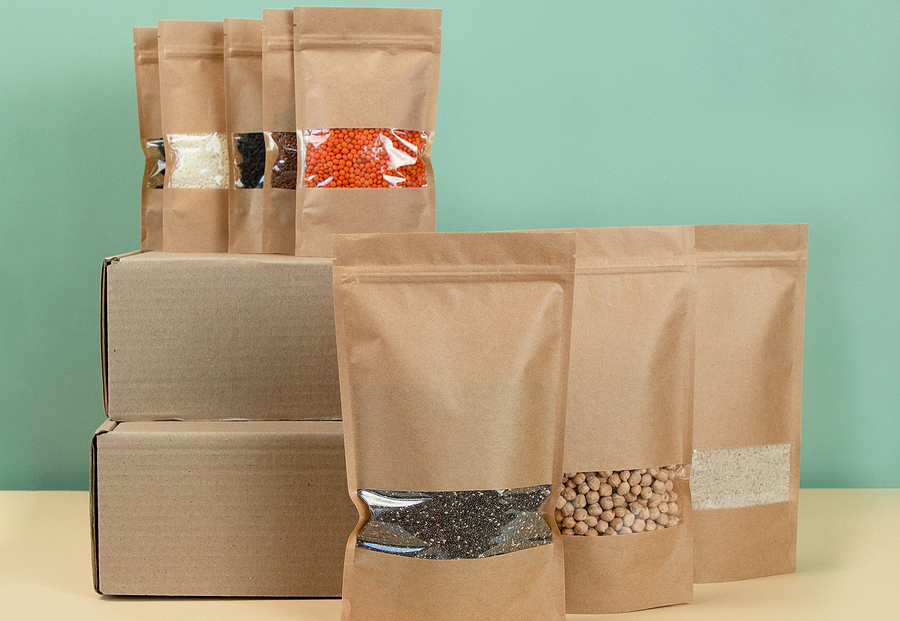
More and more Consumer Packaged Goods (CPG) goods are sold direct-to-consumer or via eCommerce. And, with consumers becoming more green-conscious, they are more likely to take positive action to protect the environment by choosing brands that reflect their beliefs. As a result, CPG brands are concerned about the impact of packaging waste and committing to a sustainable future. This trend allows the packaging industry to design packaging aimed at reducing material waste, product weight, and shipping costs, including:
Flexible Packaging made from non-rigid materials, such as resealable bags and pouches, is a market segment that doubled in size during the last decade and is forecast to grow to $269 billion in 2024.[1] For the most part, flexible packaging uses high-tech plastic, made of polyethylene, polyethylene terephthalate, or polypropylene, which is durable but deteriorates when discarded. It is ideal for food products due to its easy, food-safe storage. In addition, it is lightweight, uses less plastic, is cheaper to produce than rigid packaging, and takes less space to transport, resulting in reduced production and shipping costs.
Reusable Packaging is packaging that can be used multiple times without impairing its protective function. Manufacturers are focusing more and more on producing refillable containers that can be refilled with the consumer’s product of choice and topped off as needed. Reusable packaging benefits the entire supply chain for various industries, including automotive, food and beverage, fast-moving consumer goods (FMCG), retail and wholesale, industrial, healthcare and pharmaceuticals, and mail and parcel.[2]
High-Recycled Content Packaging, or Packaging, whose content contains a high percentage of recycled material, is part of the global sustainability movement. Businesses are beginning to embrace waste-efficient packaging, with over 500 organizations signing the New Plastics Economy Global Commitment to increase their recycled packaging by 25% by 2025. Companies signing the commitment represent 20% of all plastic packaging produced globally, some of which are well-known consumer businesses such as L’Oréal, MARS, Nestlé, PepsiCo, The Coca-Cola Company, Unilever; and the world’s largest retailer – Walmart.[3] Government is also beginning to encourage and mandate the use of recycled some are some are actually taking action. For example, in April, 2022, the United Kingdom imposed a new tax on plastic packaging containing less than 30% recycled material.
The SPI of Chicago team of expert recruiters leverages an extensive industry network and body of experience to bring you top talent in the packaging and plastics industry. We focus on saving you time and money by securing candidates who can increase revenue efficiency with offers designed to attract the top performers in the industry. When you partner with SPI of Chicago, our skill for negotiating offers attracts and solidifies placements for a smooth and successful hiring process. Contact SPI of Chicago Today!
Working with SPI of Chicago you experience a smooth and successful hiring process. Our team ensures you get the candidates you want the first time who can hit the ground running from day one. We focus on candidates who know your niche, live in your area, or are open to realistic relocation expectations. Our skill for negotiating offers, attracts, and solidifies placements to close your hiring process.
Call SPI of Chicago Today at 815-261-4403 x 100
Sources:
[1] Smithers Pira Reports
[2] Reusable Packaging Association
[3] New Plastics Economy Global Commitment (Ellen MacArthur Foundation)